Eyes and Bones
There is good news and there is bad news for long-duration space flight

Over sixty years of space flight we’ve learned a lot about how bodies respond to life in freefall. In the first few days in space, fluid migrates from the lower body to the head and trunk, giving astronauts chicken legs and a characteristic puffiness in the face. Spacesickness is common. NASA’s guidelines matter-of-factly recommend not scheduling too much on one one’s first day in orbit, to leave time for all the barfing.
Within a few days, an astronaut’s body starts to to resorb bone, particularly in the hips and lower spine, a process that will continue at a steady rate for as long as they stay in space. There are marked changes in the immune system, with latent viruses (like chickenpox and Epstein-Barr) are likely to reactivate. And at longer time scales, 70% of long-duration crews develop a poorly understood degenerative condition of the retina and optic nerve with no analogue on Earth.
The multiple health impacts of prolonged weightlessness are collectively called deconditioning. In many ways they mimic an accelerated aging process, and there are worse ways to think of a Mars mission than a rocket-propelled nursing home trying to get its crew back into gravity before their bodies give out.
In this post, I want to focus on the two biggest hypogravity-related health risks facing a Mars-bound crew: damage to the bones and eyes.
Bones
The problem of bone health is emblematic of what makes space travel a drag. It’s not a virile manly problem like making sure your rocket stays erect, but one of slow and inexorable physical decline, remarkably similar to aging.
Human beings in free fall can expect to lose about 1% of lower body bone density each month. When you measure bone strength instead of density, the decline is sharper, around 2.5% per month in the hip joint. Unlike other adaptations to space, the rate of bone loss does not level off with time. Extrapolating from bedrest analogues suggests astronauts on a thousand-day mission could lose over a third of their hip and femur bone mass. This much bone loss would put them at extreme risk of fracture, even in Martian gravity.
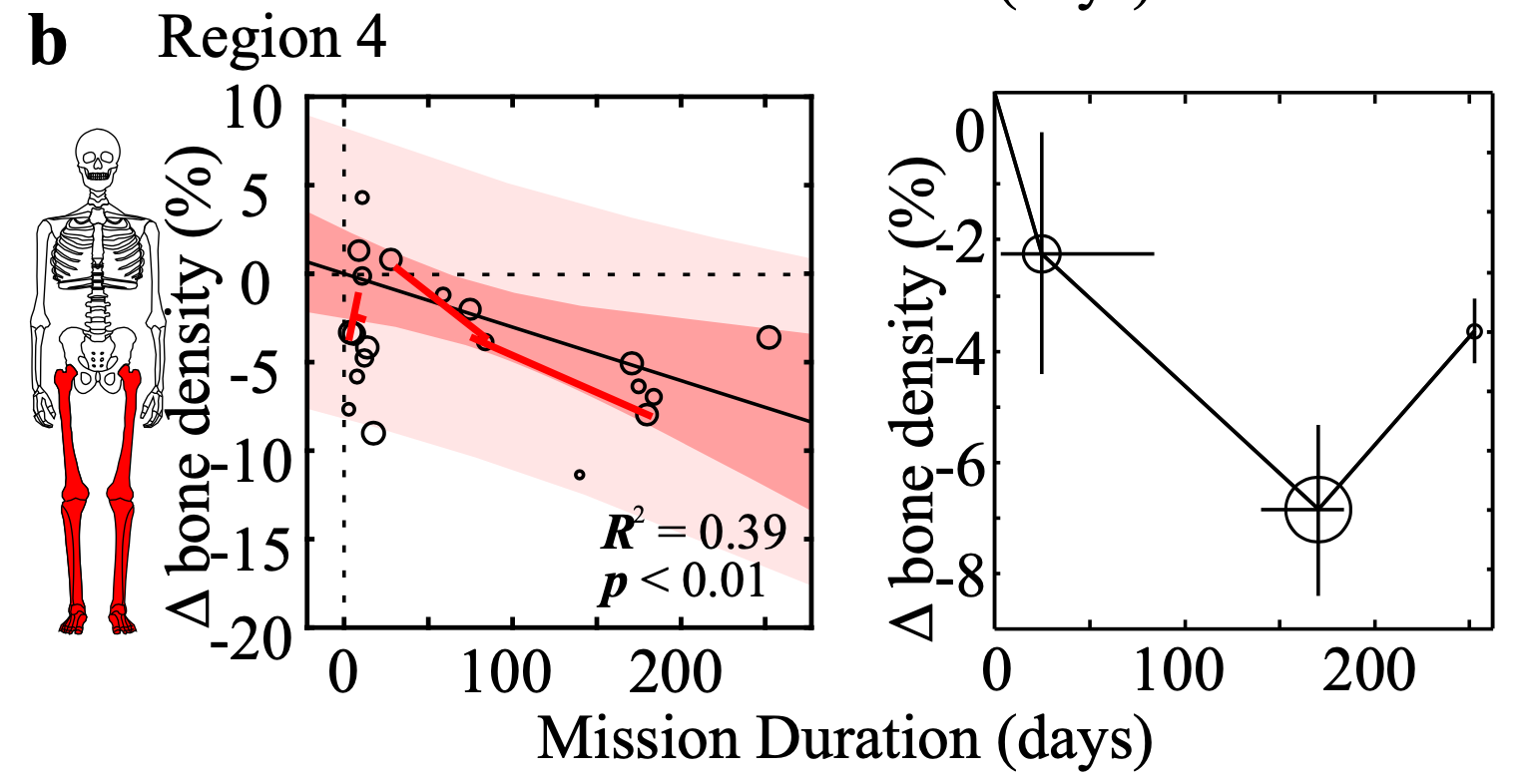
One study that examined the bones of 14 returnees from the space station found that “the post-flight proximal femoral strengths for three of the astronauts are close to the median strength for elderly Caucasian women, the population at greatest risk for osteoporotic fracture.” One of the group lost so much strength in his femur that a stumble or fall onto a carpeted floor would have broken his hip.
In other words, ISS astronauts have already been coming back to Earth with old lady bones. The rate of bone loss on a six-month ISS mission is comparable to the decline a man sees between age 40 and 60, and is about six times greater than what women experience during menopause.
Tracking bone loss
In 2010, NASA convened a Bone Summit to come up with a better plan for mitigating bone loss in their crews.
Historically, NASA measured bone loss using an imaging technique called DXA (dual‐energy X‐ray absorptiometry), which shines X-rays through bones to give a rough measure of their total mineral density. NASA likes DXA because it is cheap and ubiquitous, being the main clinical tool for measuring bone loss in the elderly.
But DXA is a measure of bone density, not strength, and astronauts are not representative of the elderly population that DXA scores are calibrated against. Since the specific risk we’re worried about is bone fractures, we need to a way to directly measure bone strength.
Large bones in the body get their strength from a foam-like core of mineralized tissue called trabecular bone. As the body resorbs this bone, the links in its latticework structure get thinner. If they thin to the point of breaking, the lattice will never re-form, and the bone becomes permanently weakened.
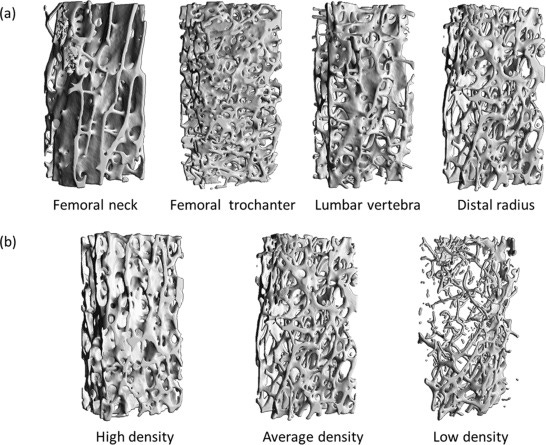
Tracking changes in trabecular bone means feeding a 3D scan of each astronaut’s bones into a computer model, a complicated method without a lot of history. NASA has just started conducting these scans systematically; the Bone Summit insists that they can’t offer a proper clinical opinion until there have been multiple long-duration flights under the new protocol.
But the same summit suggested a preventative drug that has so far shown remarkable results.
A magic bullet?
In the past, NASA’s chief weapon against bone loss has been exercise. Astronauts on the ISS spend hours a day working out on a kind of orbital Soloflex called the Advanced Resistive Exercise Device. Together with better nutrition, these workouts have brought the rate of bone loss to about half of what it was on Mir, but at the cost of about three hours a day in useful time crew time. A single ISS crew member spends more time exercising each week than the entire space station has available for scientific research.
Keep reading with a 7-day free trial
Subscribe to Mars For The Rest of Us to keep reading this post and get 7 days of free access to the full post archives.